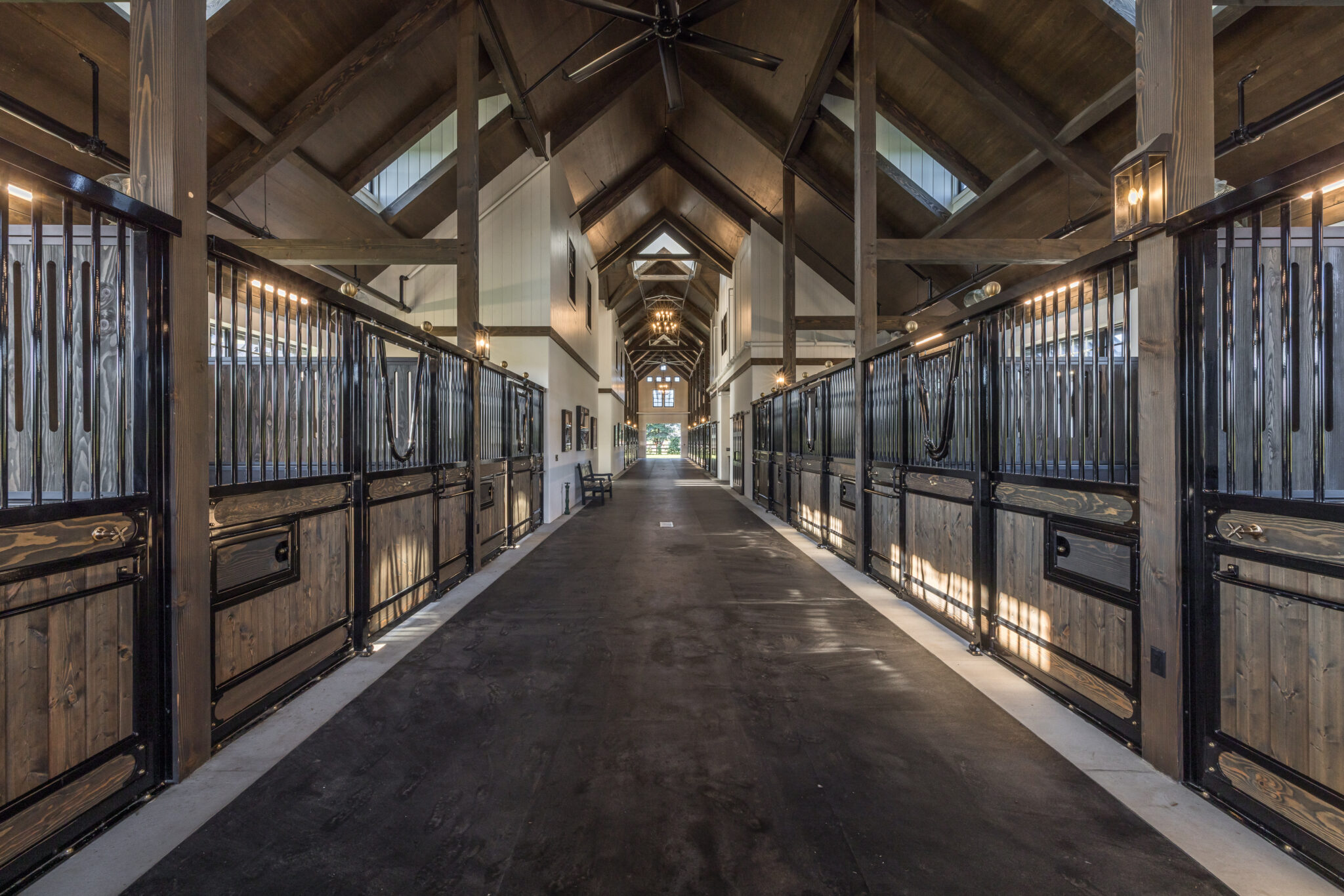
The design principle form follows function was coined by architect Louis Sullivan in 1896. He attributed the core idea to ancient Roman architect and engineer Marcus Vitruvius Pollio, who asserted that a building should have three attributes: firmitas, utilitas, and venustas — strength, utility, and beauty.
These three pillars form the foundation of every equine barn built by B&D Builders.
Our Horse-First Design Planning Process
We begin with an in-depth discussion about you and your goals for your barn. We ask about the number of horses you plan to have on the property, and consider zoning restrictions that may impact that number or limit the building size. We discuss your horsemanship goals and the discipline and breeds you plan to work with, if you’ll be offering boarding services or rental agreements, or if you ever plan on having mares bred and foaled at home.
This conversation guides our site planning process, allowing us to make informed decisions on stall size and quantity, aisle width and room layout, pathways for outside access, lighting and ventilation requirements, and other safety measures that make living or working in your barn a dream.
Horse Stall Design
Stall size is determined by breed and purpose. A private backyard farmette might need only six comfortable stalls, but a large training facility might need 20 larger stalls to fit a variety of animals. A breeding farm will need stalls large enough for mare and foal to be together, and a draft breed owner will need more space than someone who prefers pony breeds.
Once we determine the size and number of stalls, we look at design options. The stall dividers can be solid wood for privacy or open bars for airflow and visibility. Stall fronts can be closed, or they can be partially open so that horses can look out into the aisles. They can also have features like feed access doors and automatic watering systems. Dutch doors can be added for light and fresh air. All stalls will have rubber floor mats, but can also have stall mattresses or other comfort features.
Aisle Layout
To determine aisle width, we’ll look at traffic movement and volume around the barn. Where many horses are present, and grooming and tacking are done in cross ties, wider aisles may improve safety for horses and handlers throughout their daily movements. Grooming stalls can be added so that this work takes place outside of the aisle, reducing the number of horses passing each other.
Barn Ventilation Strategies
We look at the local landscape, average weather patterns, and prevailing winds to orient the barn in such a way that fresh air is constantly circulating. Ridge vents, cupolas, soffits, and fans are then worked into the design. Warmer climates will have ventilation systems designed to promote continuous airflow, and more seasonal locations will include measures to retain heat during winter.
Lighting Design
Bright natural light around the barn is ideal for visibility and reduced energy consumption. Whether through windows, Dutch doors, or skylights, we choose to add natural light whenever possible. For darker days, we design lighting systems that create even, ambient lighting and minimize glare.
Fire Safety & Electrical Planning
Because of the dust and hay stored in a horse barn, fire safety is critical. We plan and install sprinkler systems, make fire extinguishers easy to access, and help you have a well-marked fire escape route. Our electrical systems are planned and installed to meet all local codes, minimize cable runs and overloads, and place outlets in safe yet functional locations.
At the end of this stage of the planning process, we have a utilitarian layout in hand, an initial design that has horse-first details and handler functionality. With a firm understanding of your goals for the barn, we’ll next collaborate on selecting the highest-quality materials, hardware, and finishes so that your farm fits you and feels like home.
Equestrian Barns That Balance Form & Function
Louis Sullivan said, “A proper building grows naturally, logically, and poetically out of all its conditions.” At B&D Builders, we couldn’t agree more. We take the time to understand you, your horses, and your goals to ensure your barn is not only beautiful but, most importantly, serves your needs for years to come.
To see this philosophy in action, visit our Project Gallery. Or, for more information about building your own custom equestrian barn, contact us today.